Why Tungsten and APT Supply Are Tightening—and What It Means for Sourcing Strategies
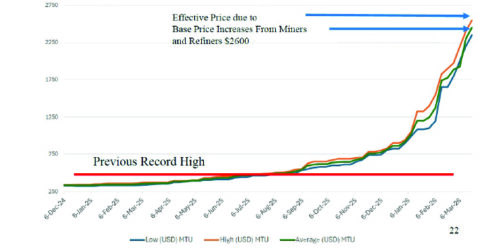
The tightening availability of tungsten ore and ammonium paratungstate (APT) is not the result of a single disruption, but rather the culmination of structural constraints that have been building across the industry for years. Together, these pressures are fundamentally changing how manufacturers think about supply risk and long-term sourcing.
One of the most significant constraints is the limited number of economically viable tungsten deposits. New mining projects face exceptionally long development timelines, with permitting, environmental reviews, and capital requirements often stretching a decade or more. Even in periods of strong demand signals, meaningful new supply cannot be brought online quickly enough to relieve near-term shortages.
Compounding this challenge is the geographic concentration of tungsten mining and APT conversion capacity. With much of the upstream supply chain clustered in a small number of regions, the market remains highly exposed to geopolitical risk, trade policy shifts, and potential export controls. For downstream manufacturers reliant on international material flows, these factors introduce layers of uncertainty that extend far beyond normal price volatility.
At the same time, demand for tungsten continues to expand. High-performance carbide tooling has become increasingly critical for precision machining, electrification, infrastructure investment, and defense-related production. As these sectors grow, tungsten consumption rises along with them—further tightening the already strained balance between supply and demand.
These dynamics are exposing the limits of traditional sourcing strategies. Historically, carbide producers have relied heavily on primary raw materials, sourcing tungsten ore converted into APT and then processed into powder and finished carbide products. While this model functioned well during periods of relative market stability, its vulnerabilities are now increasingly apparent.
Just-in-time procurement strategies are particularly difficult to sustain when upstream availability is constrained. Price volatility, material allocation risk, and extended lead times complicate production planning and strain customer commitments. In this environment, supply reliability is no longer a secondary concern—it has become just as critical as cost optimization.
As a result, many companies are reassessing what they define as a “secure” supply. Diversification of feedstock sources is no longer optional but essential, prompting producers to rethink their dependence on traditional raw material pathways and explore more resilient approaches to securing tungsten-bearing materials in an increasingly constrained market.