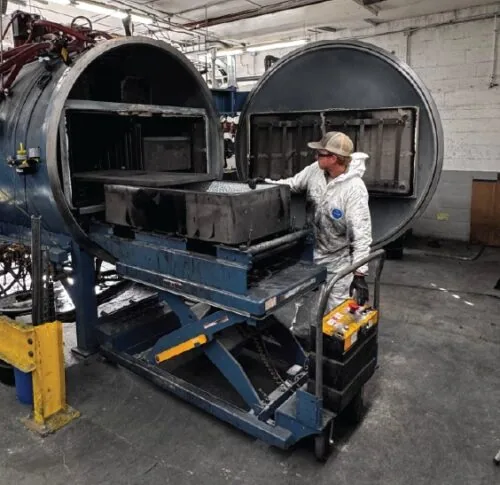
Zinc Furnace Technology and Its Growing Importance in Carbide Recycling
As recycled feedstock becomes an increasingly important part of the tungsten supply chain, the technologies used to recover carbide material matter more than ever. Among available recycling methods, zinc furnace processing plays a particularly important role in enabling high-quality carbide recovery suitable for demanding industrial applications.
At a high level, the zinc furnace process involves treating carbide scrap with zinc at elevated temperatures. During processing, zinc penetrates the carbide microstructure and facilitates the separation of tungsten-rich material from the binder phase. Once this separation is complete, the recovered material can be refined into usable tungsten feedstock and reintroduced into carbide production, effectively closing the material loop.
Compared to alternative recycling approaches, zinc furnace technology offers several key advantages. It delivers high recovery efficiency while accommodating a wide range of carbide scrap forms, including solid tools, inserts, and production waste. Equally important, when the process is properly controlled, it preserves the material characteristics required for high-performance carbide applications, ensuring recycled feedstock meets stringent quality requirements.
These capabilities have direct implications for customers as the market moves toward 2027 and beyond. Tight upstream supply conditions mean that disruptions or allocation challenges can quickly cascade through the supply chain, affecting tool availability, lead times, and cost predictability—putting end users at risk.
Working with suppliers that have diversified raw material strategies helps mitigate these risks. Recycling capability—particularly zinc furnace processing—adds resilience by reducing dependence on a single source of raw material, buffering against shortages, and supporting more consistent output during periods of market volatility. For customers, this translates into greater supply reliability and confidence in an increasingly constrained tungsten market.