How Ultra-Met Carbide Prepared for a Structurally Tight Tungsten Market
The global tungsten market has moved beyond a temporary imbalance and into a period of sustained tightness. As the industry approaches Q3, constraints in ammonium paratungstate (APT) and primary tungsten ore availability are becoming increasingly difficult to ignore. Therefore, for carbide producers and end users alike, this environment raises a critical question: how can reliable access to tungsten-bearing materials be maintained as traditional sourcing models come under growing pressure?
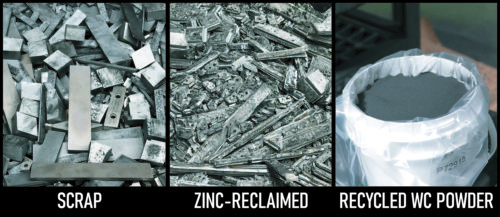
One answer gaining momentum is carbide recycling—specifically, zinc furnace recycling. Once framed largely as a sustainability initiative, recycling is now increasingly viewed as a strategic component of supply security. Long-standing investment in zinc furnace capability has helped position Ultra-Met Carbide to operate more effectively in what appears to be a structurally constrained tungsten market.
Leveraging Zinc Furnace Capability as Part of a Diversified Feedstock Strategy
Ultra-Met Carbide’s approach reflects an early recognition that recycling must operate at industrial scale to play a meaningful strategic role. Rather than reacting to recent market tightening, we developed in-house zinc furnace capability as a deliberate part of our raw material strategy.
This capability allows us to supplement primary feedstocks with recycled tungsten material, reducing exposure to volatility in APT pricing, allocation risk, and ore availability. In tighter supply environments, recycled feedstock provides additional flexibility—supporting more stable production planning and greater consistency in meeting customer commitments.
Equally important, having established recycling infrastructure in place before conditions worsen enables a more controlled and predictable response to market disruption. When material availability tightens suddenly, companies without alternative material streams are often forced into reactive sourcing decisions. By contrast, reliance on existing recycling streams can provide continuity and resilience, helping mitigate the operational impacts of upstream constraint.
As tungsten supply dynamics continue to evolve, preparedness—not reaction—has become a defining differentiator. Integrating recycling into the raw material strategy offers a practical way to navigate volatility while maintaining reliability in an increasingly constrained market.