Tungsten Supply Volatility and the Growing Role of Recycling
Tungsten has long been recognized as a strategic material, valued for its exceptional hardness, wear resistance, and performance at high temperatures. These characteristics make it indispensable in cemented carbide tools used across aerospace, defense, energy, automotive, mining, and advanced manufacturing industries. While global demand for tungsten-containing products continues to grow, primary supply has increasingly struggled to keep pace.
Looking ahead, the tungsten market is facing a convergence of structural challenges. The availability of tungsten ore is tightening, ammonium paratungstate (APT) production remains constrained, and upstream capacity expansion is limited. Together, these pressures are reshaping how manufacturers and materials suppliers think about sourcing tungsten-bearing materials and managing long-term supply risk.
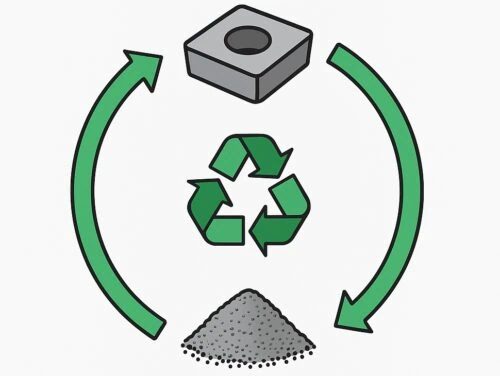
Historically, carbide recycling has existed as a complementary practice—often positioned primarily as a sustainability initiative or a waste-reduction measure. Today, that framing is rapidly changing. Recycling is no longer viewed as a backup plan, but as a strategic necessity.
Recycled tungsten feedstock offers several critical advantages in a tight market environment. It reduces dependence on mined ore and APT imports, shortens and stabilizes supply chains, and allows producers to reclaim valuable material already embedded within industrial systems rather than relying solely on new extraction. As supply constraints are expected to intensify through 2026, recycling is increasingly becoming a core component of supply security.
While recycling alone is unlikely to replace primary tungsten mining, its role in the global supply landscape is clearly becoming more permanent and more significant. Companies that invested early in recycling infrastructure—particularly zinc furnace capabilities—are now better positioned to navigate tightening market conditions. Instead of reacting to disruptions, they are operating from a position of preparedness, integrating recycled material as a foundational element of their tungsten sourcing strategy.